

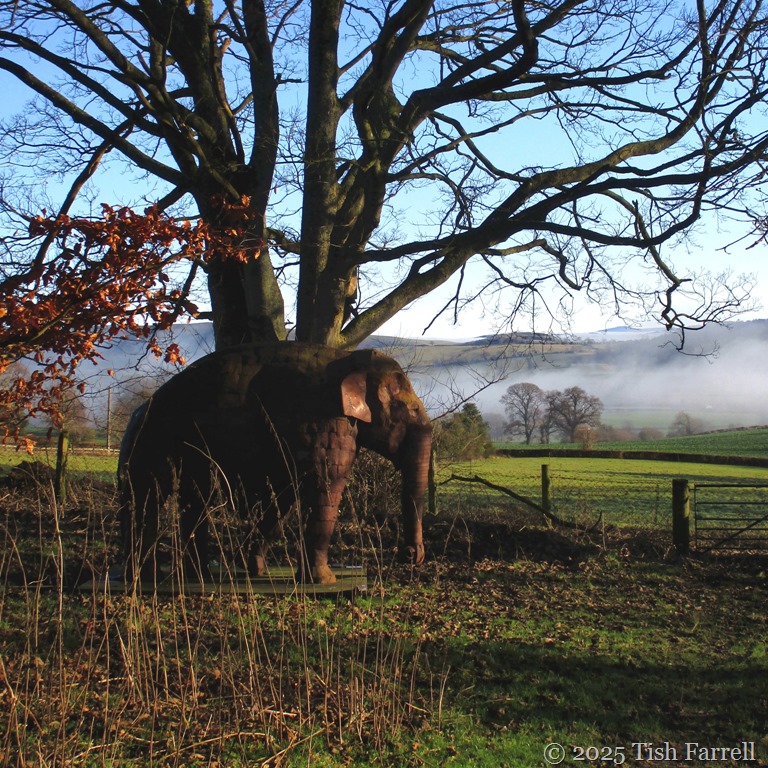
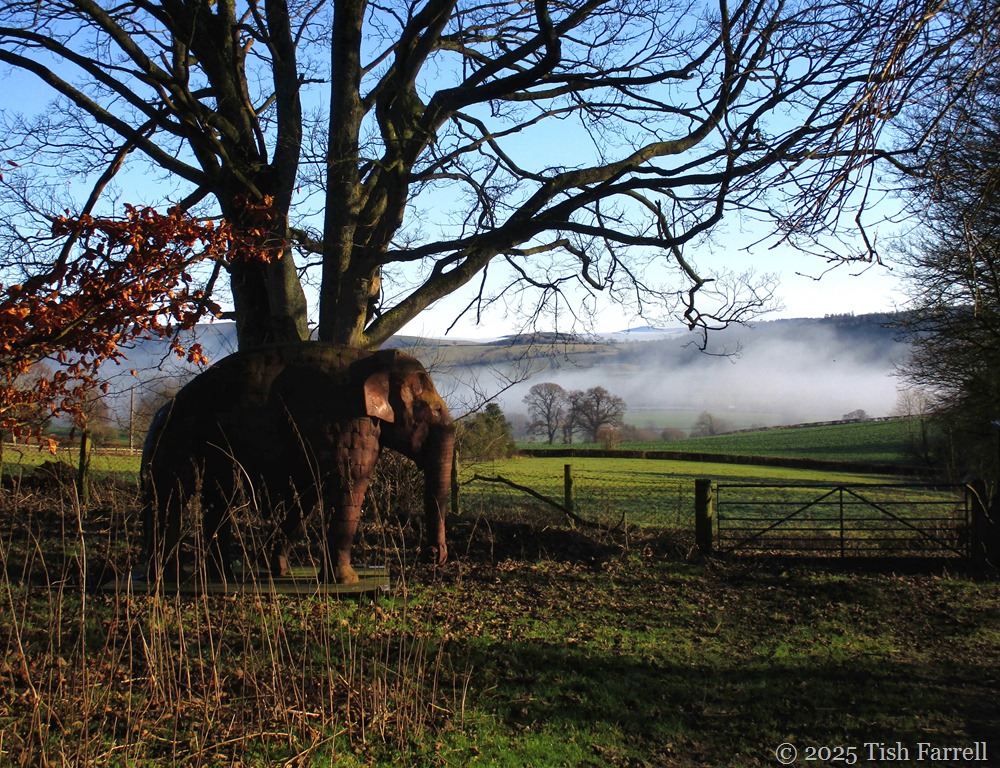
Well, at first sight, glimpsed through a December hedgerow, it truly did look like an actual elephant. Good heavens! What was it doing here in the Shropshire Hills?
We discovered it last week, by chance, as we explored the hillside paths above the town. There it was, beside the Shropshire Way, at Foxholes campsite, and with company too. The Buddha no less.

*
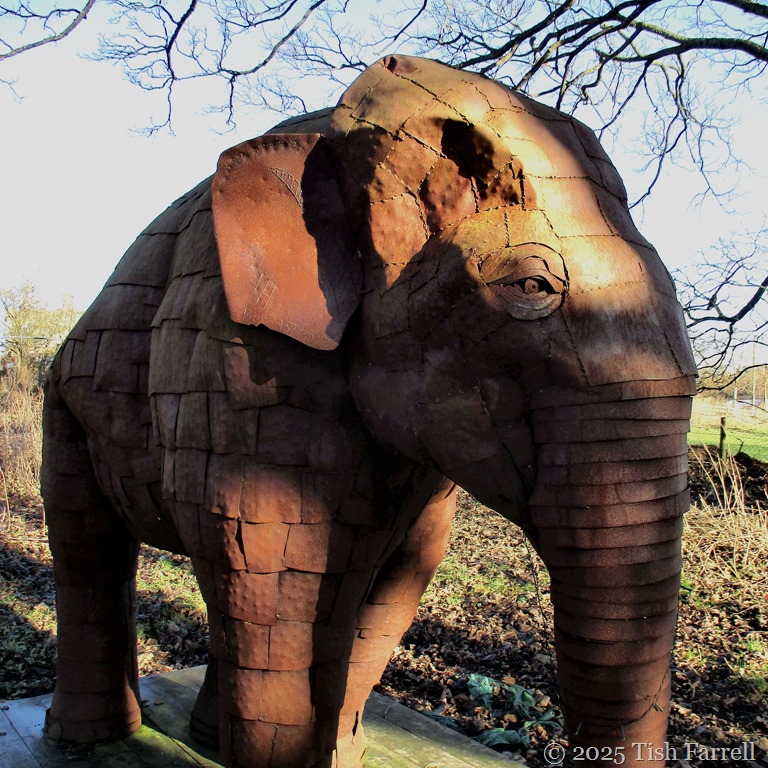
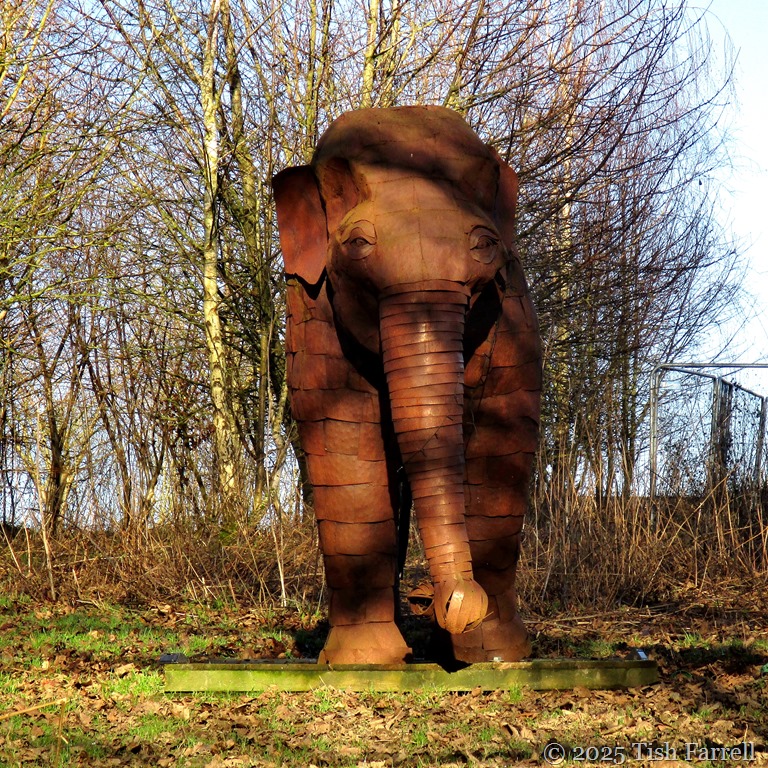
Closer inspection of course revealed that it was cunningly constructed of metal plates, now richly rusted.
*
We then realised that it was doubtless one of the exhibits in the Bishop’s Castle town trail, The March of Elephants. You can see the other artworks at that link. This particular work was created by local artist Ben Ashton, but I couldn’t find anything further about him.
By now you could well be wondering why there is an elephant art trail in a Shropshire market town wherein the trade in sheep and cattle has for centuries been the major enterprise.
There are two connections.
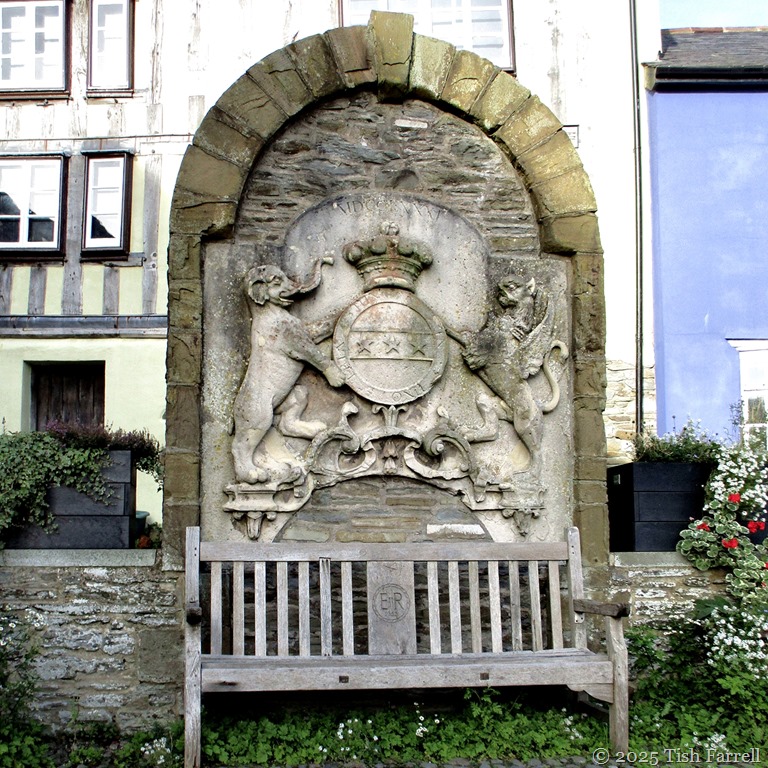
First there is Robert Clive aka Clive of India (1725-1774). After he had finished plundering Bengal (he had started out as a clerk of the East India Company), he returned to his native Shropshire with an eye-wateringly colossal fortune and lived at Walcot Hall just outside Bishop’s Castle. He was further rewarded for his India efforts with a seat in Parliament (MP for Shrewsbury) and an Irish peerage. His newly wrought family crest featured an Indian elephant, of which a carved stone version still survives in the town’s Market Square. It had once been prominently sited on the main window of the Market Hall (since demolished) built by Clive’s son Edward.
*
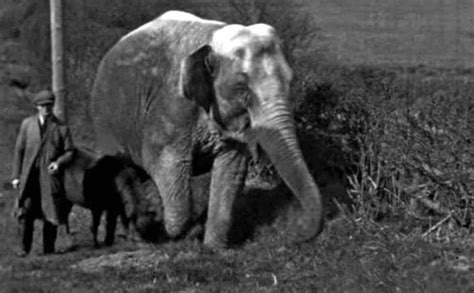
A rather more pleasing elephant association is the fact that during World War 2, one or more circus elephants were kept in Bishop’s Castle for safety’s sake. They lived in the stables of The Castle Hotel at the top of the town. At least one was to be seen exercising along the lanes. There’s a brief film clip of it here: https://www.youtube.com/watch?v=AnMu3l3Q0rE
*
So there you are. Seeing elephants in Bishop’s Castle is not so outlandish after all.
*
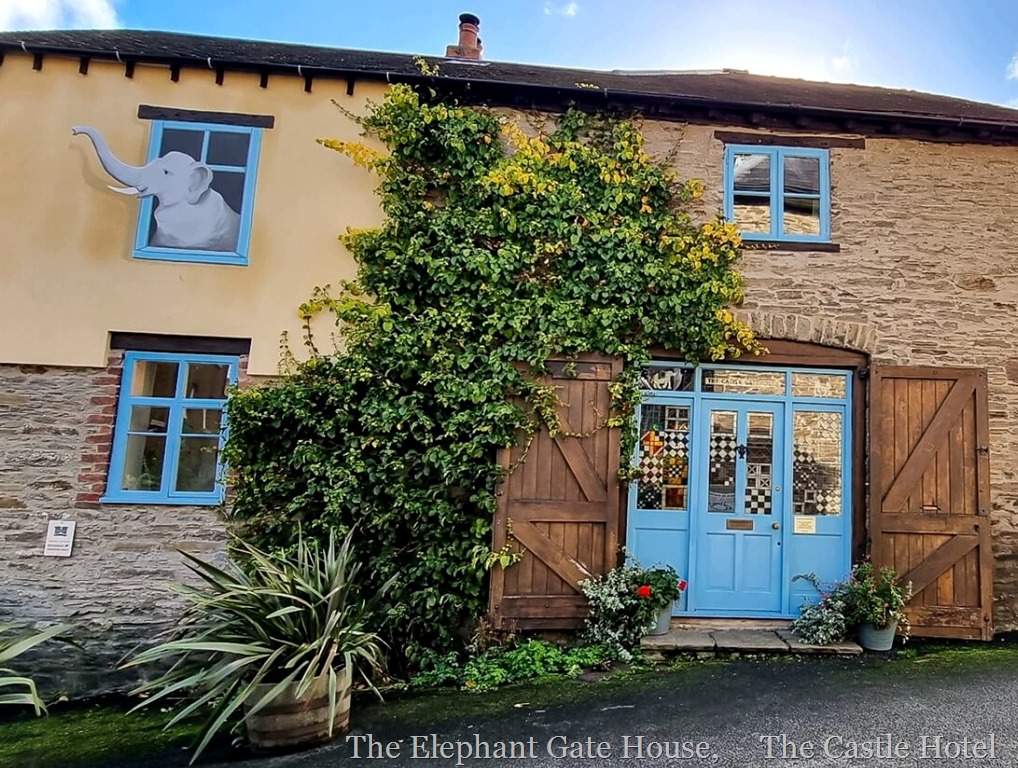
P.S. The war-time elephants’ quarters have been given a plush makeover and you can now stay in The Elephant Gate House.
#GeometricJanuary Day 4 This month Becky is hosting square photos with a geometrical theme.

oh my – took me a few moments to spot its platform. I’d definitely fallen for it – and both reasons are fascinating for the links. Maybe the town should be renamed Elephants Castle!
You may have a good notion there, Becky. There seem to be elephants all over the place lately. We also have one that heads the Michaelmas Fair parade: https://www.facebook.com/watch/?v=1060877830590046
is that a town suggestion box?!
Nice post 🌅🌅
Thank you.
Welcome dear friend 🌅
Amazing, Tish
wow!
As an elephant lover I absolutely adore this! The rust gives him such a beautiful colour, it reminds me of the young orphan elephants we saw at the David Sheldrick place in Nairobi who all looked red due to rolling in the mud! And I’d also love to stay in that Ekephant Gatehouse 🐘
The artist did a good job recreating a young elephant. And yes, those red dusty elephant infants at the Nairobi orphanage. Thanks for reminding me of them. They are indeed the same colour.
The Gatehouse does look fab. I’m tempted myself. I’ve often wondered how it would work, going on holiday in one’s own town and seeing the place with visitors’ eyes.
Ooh, that could be interesting! But how easy would it be to ‘switch off’ your resident’s perspective I wonder?
That’s THE big question, methinks 🙂
Brilliant! He looks so real against that foggy background.
That’s just what I thought, Jo.
Wow, thanks for the background history of this statue Tish. I’m not sure what I would be thinking if I came upon this elephant while walking. Prior knowledge is always helpful.
It was certainly one of those ‘double-take’ moments. And a fabolous view of the Long Mynd behind it. Must remember to take it a bun next time 🙂
I always learn something from your posts. Now I know what the Long Mynd is, but will I remember it? It’s tough to get old!
I know that feeling, Anne. I put forgetfulness down to brain content overload.
😍
He really does look real. Wonderful!
Amazing how well its creator caught the overall profile, considering it’s built from so many small pieces.
Yes, very much so.
I love the connection between the elephant and Clive of India. It would be amazing to come across it there in the open.
It truly was a surprise. Talk about light under bushels, none of locals had mentioned it. Or maybe elephants are just the usual thing here 🙂
Brilliant and the first image did look real, you had me wondering for a little while. Interesting story.
Thanks, Suzanne.
Fascinating. Elephants are the best.
They’re hard to beat 🙂
How wonderful to come across such a fabulous elephant. A nice link to your African past.
Finding it has pleased me no end, Jude. On Friday I dragged family members up the hill to see it, before I would let them eat lunch!
Oooh. We missed out on the Elephant in the Woods.
I wish I’d known about it when you were here.
We saw plenty. Don’t worry.
Including what I call ‘the armoured elf’. You asked me about it, and I did try asking the now owner of the adjacent Porch House, artist Jenny Jones, about it. She inherited it with the house and only knew it was made by some local artist who also made the life size warthog in the garden at the bottom of our road! Maybe the same person who made the elephant (?)
Heigh ho. Who knows? Interesting though – thanks!
I’ve been reading your work for a while now Tish, so I knew about the elephants. I shared your photos with my sweetheart this morning though. She likes the story too.
So nice of you to share, Thom.
I would have been taken in by that too. It blends in so well.
Yes, it does look at home under the tree 🙂
Beautiful elephant. Very realistic in the nature.
Thanks, Melodie.
That elephant sculpture is very life like.
It’s extraordinary isn’t it. Not what you expect to find in the middle of Shropshire farmland.