
*
…are the quietest places under the sun.” A E Housman A Shropshire Lad
*
Except there was no sun on Tuesday when we went to Clun, only rain clouds, bloated, iron grey, hanging in shrouds across the hills and pine woods; the lanes streaming with run-off from two days’ deluge; field hedges newly farmer-sheared to thorny starkness, the herbaceous version of a convict cut.
It did not matter. We were on an outing after several days indoors.
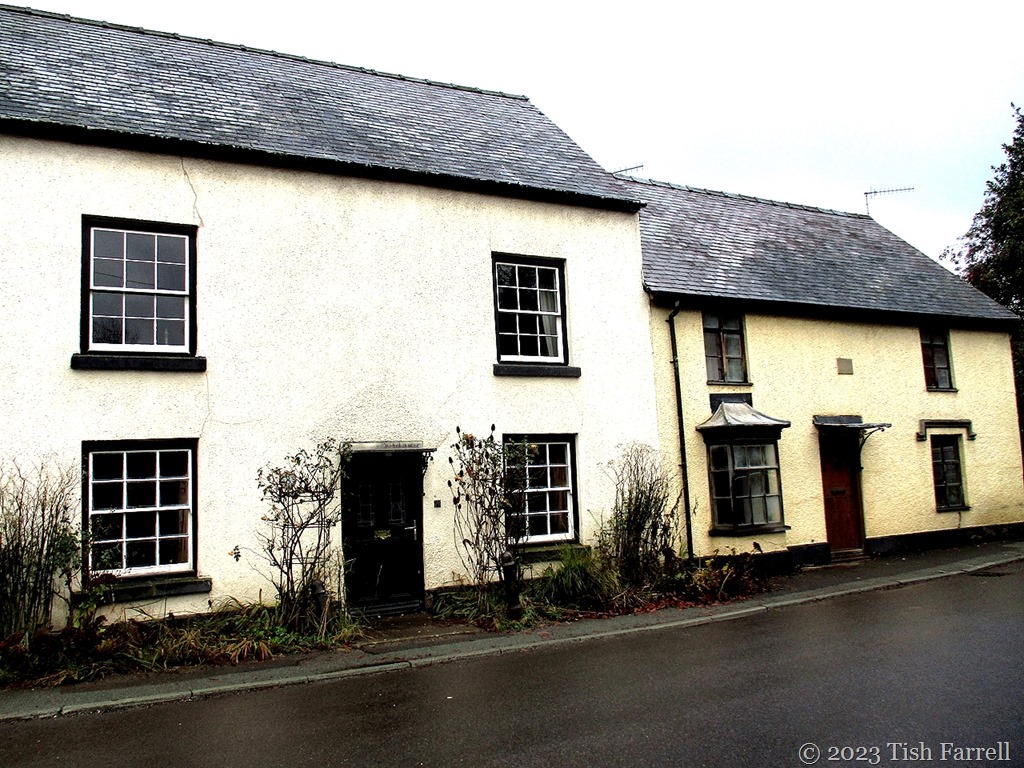
Clun is the next large village along the A488 between Bishop’s Castle and Knighton on the Welsh border. These days it is home to around 700 souls, and with or without sun, it is always quiet there, except perhaps during the Green Man Festival in May when I gather things may become a touch excitable. Once, though, it was a nexus, standing on the ancient drovers’ route out of Wales. You can picture it now, can’t you, the herds of cattle and sheep being driven on well worn paths to faraway markets in the Midlands and London; passing through many a town, the taverns en route places where news and other goods were exchanged. This then is essentially a Saxon landscape, later knocked somewhat into shape by the invading Normans, but all rooted in five millennia of farming life going back to the Neolithic period.
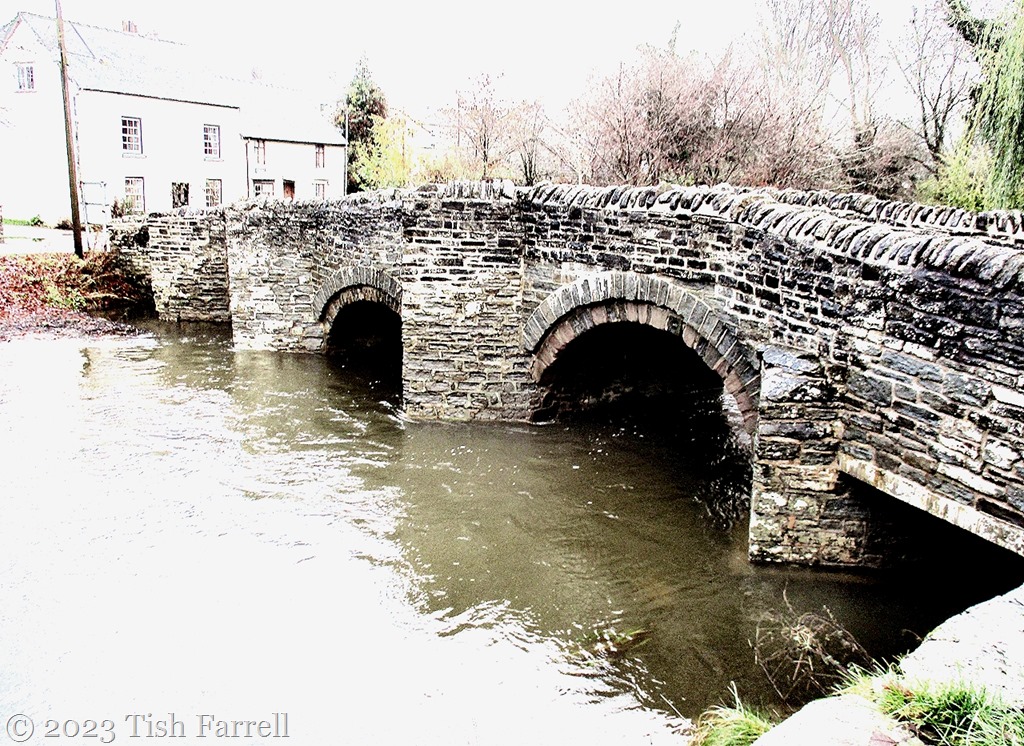
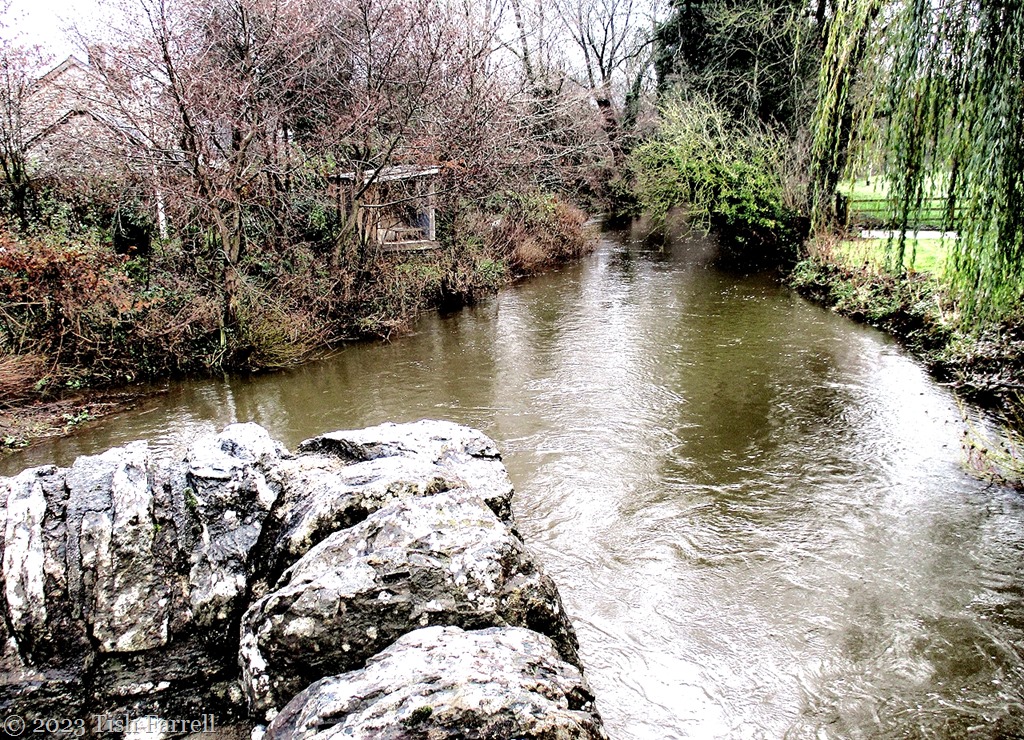
The packhorse bridge in the header photo is not that old however. It dates from the 1300s, leaving us with only 8 centuries of passing traffic to contemplate. But you do have to keep your wits about you when you cross, dodging the occasional speedy van-man, making sure you’re tucked into a niche before standing and gazing at the River Clun. In fact there is a local saying that could be said to confirm the necessity for alertness: “whoever crosses Clun Bridge comes back sharper than he went”. On the other hand, it may refer to long ago times when the crossing formed the link between Saxon Clun on one side of the valley, and the newfangled Clun of Norman interlopers on the other.
*
There was a purpose to our visit on such a gloomy day. I recalled there was an ironmongers there – an all but disappeared facility on Britain’s high streets. Brasso was needed – a good old fashioned metal polish, and also dubbin for keeping the rain out of our boots.
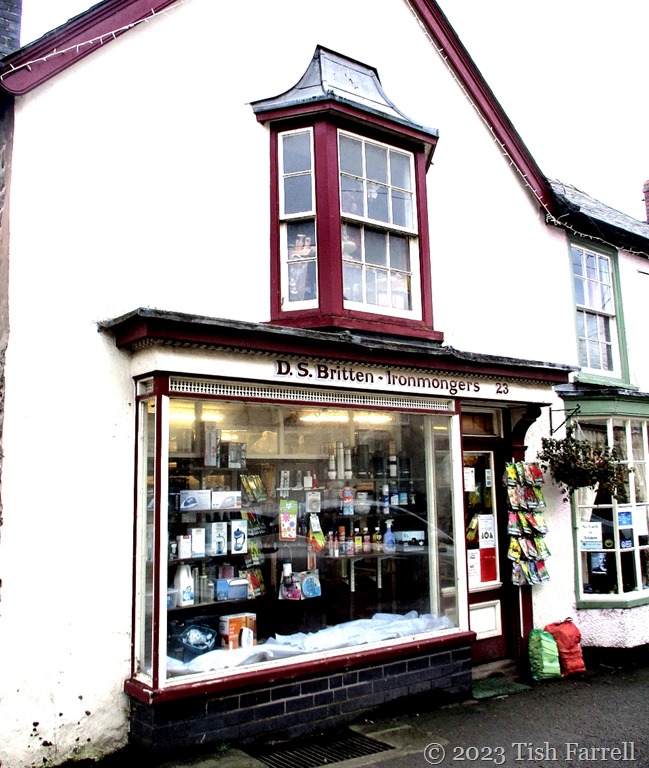
And we found them both immediately when we opened the door and stepped back in time in Mr. Britten’s magic emporium. It proved to be the hardware enthusiast’s equivalent of Willy Wonka’s chocolate factory, including the glimpse of snug ‘Dickensian’ office beside the counter.
There might be no sun outside, but there was everything under it inside. On top of that, Mr. Britten proved the most engaging proprietor, a true gentleman. He told us he was happy to sell us two screws if that’s all we needed. We didn’t, but we appreciated the gesture, and said we’d be back when we did.
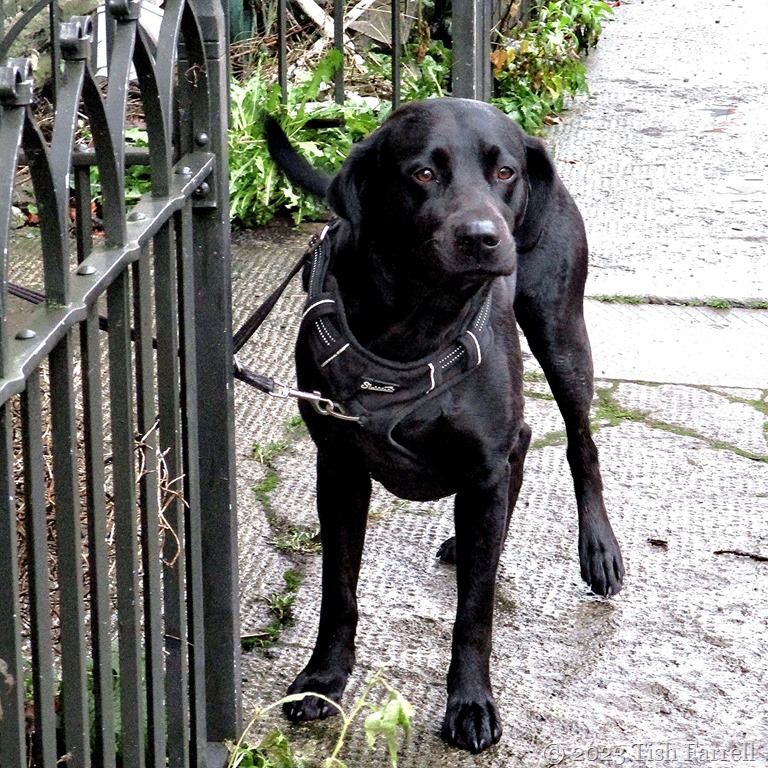
After that we mooched about on the High Street, were greeted as we went by passing locals, and also some nice dogs, found a good bottle of wine and sticky pastries in the Spar supermarket plus more welcoming encounters. And then headed for home. By midday it was almost twilight.
*
So no, it really did not matter that it was such a dank and gloomy day. Human and canine warmth sufficed; another grand trip out and only a few miles from home.
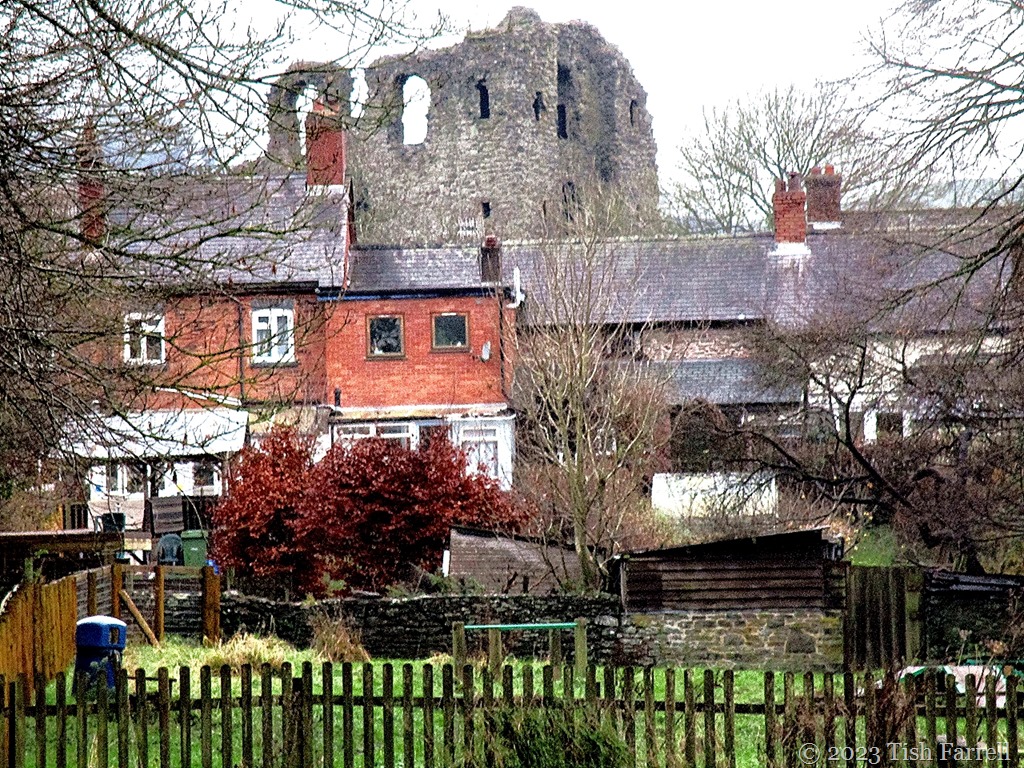
The ruined keep of the Norman castle looking especially lugubrious. We will return for a sunnier exploration.

How brilliant that tou found an old-fashioned ironmongers, Tish! An almost extinct breed! And that castle looks worth a visit
It’s a castle with quite some history I gather, built of course by the Normans to keep the Welsh in their place. But I think I read that by the 1400s it had ceased to be militaristic and extensive gardens had been laid out below the keep, which is rather hard to think of somehow.
Sounds like an excellent trip to me, Tish. I’d not heard of “dubbin”, so I looked that up. I love the header photo and the phrase “the herbaceous version of a convict cut.” The ironmongers shop sounds like the old hardware stores that we used to have in the States, where you could find everything and in every quantity, not just prepacked amounts.
That was exactly the ironmonger’s point, Janet – people now having to buy things in quantity they didn’t want just because the items were ready packaged. I seem remember the French were pretty good on hardware stores too, though it’s a long time since I was there.
I miss those big old hardware stores. Every town, village, hamlet or suburb had at least one. We had one here until recently. I loved it. You could ask for something and magically, that had it somewhere. I’m pretty sure that’s what a lot of traffic on Amazon is — people looking for all those little, oddball items that you could easily buy but now, gone. They didn’t even die for lack of business. They were plenty busy enough. Mostly, the rents got too high or the owners got too old and if there were not kids to take over — and these days, there are rarely youngsters who want a job that means being on their feet all day most days — so they sell off and retire.
Our little shops aren’t disappearing for want of customers. They are disappearing for want of people to run the shops or affordable locations. I keep hoping they will come back again …
The man in the ironmongers told us that very tale about the town’s newspaper shop. It was well patronised, but the owners wanted to retire and the family did not care to take over the business. We have the same problem with our butchers, which is up for sale, although he’s trying to hang in there until he can find a butchering buyer.
Excellent post as usual, Tish
Many thanks, Ian.
I could cry when I see the cruel hacking of the hedgerows. As for Clun, we were seriously tempted to buy a gorgeous house there, just up the hill from that dear bridge. The lack of a station and infrequent buses stopped us. I still think of it though.
We had thoughts about Clun, too. But you’re right, it is a bit too isolated transport wise. Not sure Bishops Castle scores too much higher, though there is a slow bus to Shrewsbury.
As to hedges, I’ve noticed some farmers are cutting them in the ‘A’ shape which is supposed to encourage them. But like you, I don’t care for the ones that get hacked about. The ones round here are all very neat, if short-back-and-sides-ish.
I have seen those neatly cut hedges, but here they are just hacked, with crushed and broken limbs. Awful.
I agree.
Enjoyed reading this. Could feel the past a bit.
Thank you, David.
Oh, isn’t a real ironmongers a wonderful thing? Somehow, Clun sounds a suitable place-name to find such an emporium. And you had a successful outing. Result!
Yes, indeed, Margaret. Results all round 🙂
Not to be presumptuous, Tish, but your prose indicates a heart and mind at contented, actually joyful, ease in your new but old home. I hope so. A pleasure to read!
Many thanks for those generous words, Sarah. I certainly do take tremendous joy from my new surroundings; a medicine if you like, in these troubled times. And now you mention it, it does feel quite a powerful antidote to despondency.
You capture the gloom of a dull November day so well, I shivered as I read this! But there’s definitely something about a well-stocked old-fashioned ironmongers. Somehow you always find what you need there and often several things you didn’t know yo needed!
And it’s those happenstance finds that are always so very pleasing. Sorry to cause the shivers though, Sarah.
I’m loving where you live Tish and the stories you tell about it. Love your images too.
That’s very lovely to hear, Anne. Thank you.
😊
I’ve crossed over that bridge, Tish, and visited the castle, though I’d forgotten all about it till you mentioned it. A sunny day too, as I recall. Don’t think I came back sharp, though I may well have done if I was keeping himself waiting. I didn’t get to the ironmonger, but I have a suspicion that it was a Sunday. No matter- there’s an excellent one here in Loule. We just have to look up what we need, in Portuguese. All that quiet must be good for your writing?
It’s nice to think of you visiting our local places, Jo. Am happy, though, not have to have to buy ironmongery in Portuguese 🙂
🤣🩵
Mr. Britten’s magic emporium should be cloned.
That’s a magic thought, Jennie 🙂
😀
Totally beautiful, I just love your descriptions and photos!
Many thanks, Agnes.
HAPPY CHRISTMAS FROM NEW.ZEALAND
All the very best to you too, Pete.
Thanks for this captures and these descriptions. Anita
Thank you, Anita.
An ironmonger? Is that like a “Maréchal-ferrand”? Makes me think of Pip and Great expectations… 😉
Merry Christmas and a Joyeuse Nouvelle Année Tish…
🙏🏻
Not quite, though good to have that sudden image of Pip in Joe Gargery’s forge. An ironmonger = quincaillerie. I just looked that up. Which also reminds me that I have an abiding love of French hardware stores. Happy New Year to you too, Brieuc.
I thought as much. Quincaillerie or “marchand de couleurs” sounded logical but I too liked the idea of Joe’s forge…
Bonne année Memsahib.